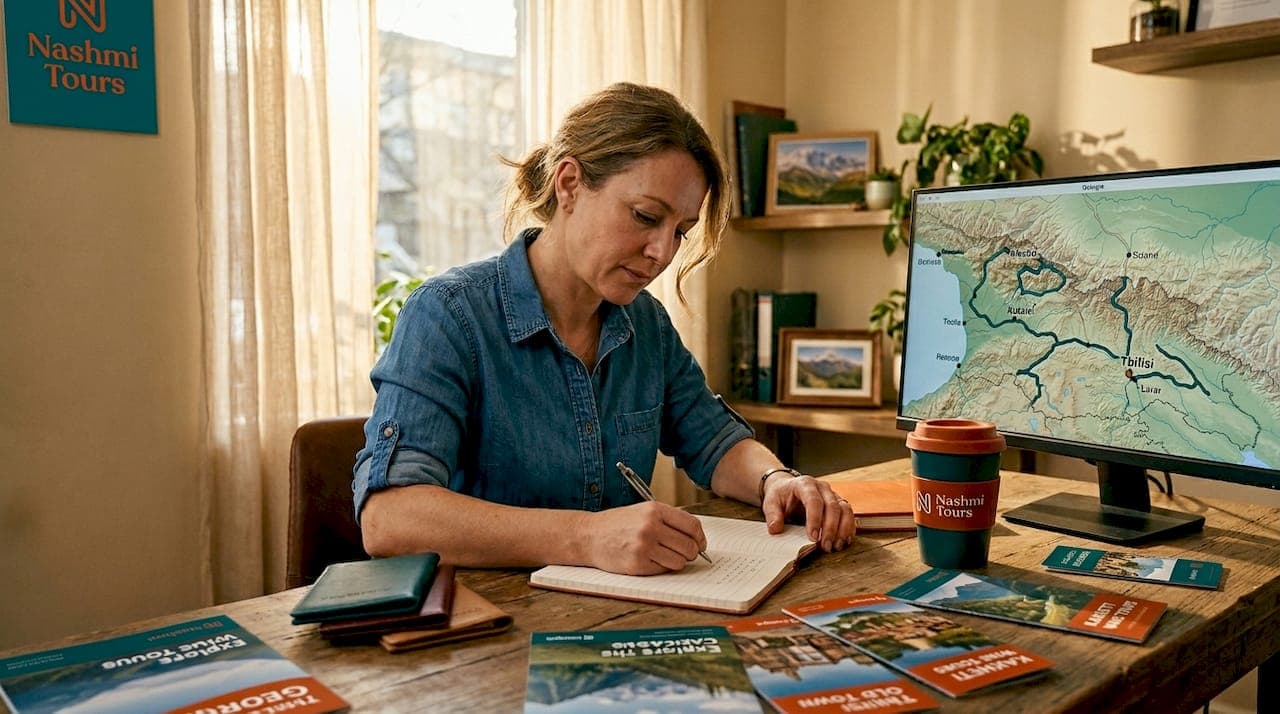
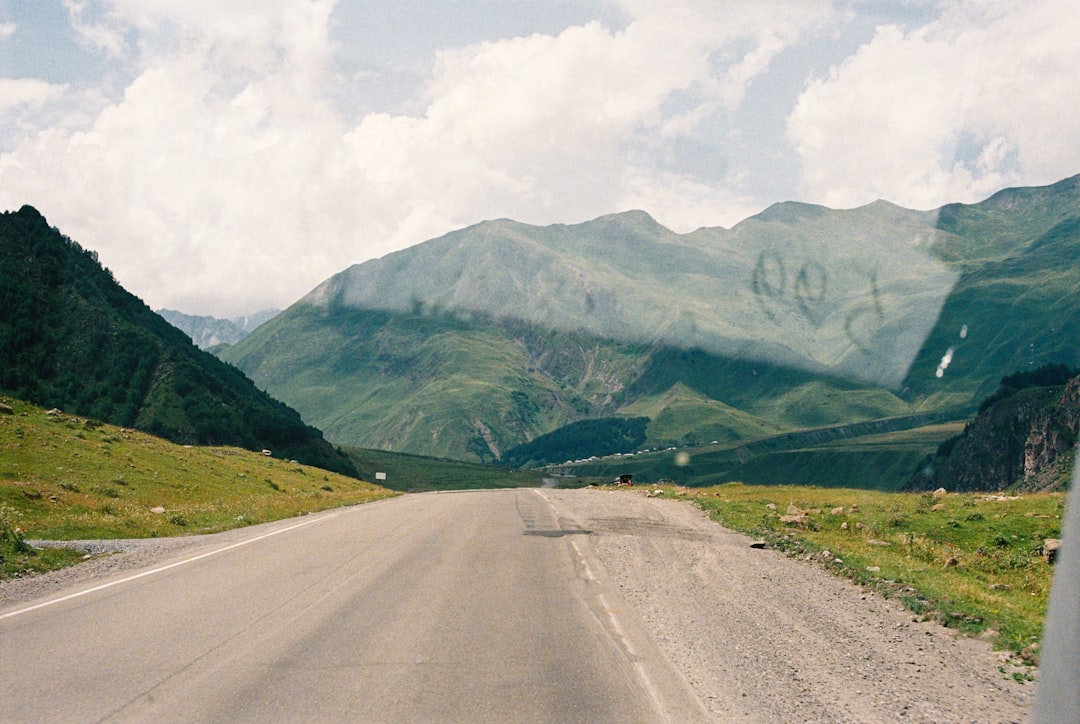
Planning a trip to Georgia sounds simple until you actually start. You search for transport from Tbilisi to Kazbegi, find a dozen options with no clear pricing, realize mountain roads require specific vehicles, and discover that some villages are only reachable with a 4x4. That’s before you factor in local regulations, language barriers, and the kind of flexibility that turns a good trip into a great one. Travel agency support exists precisely to solve these problems, and understanding what it actually covers can save you serious time, money, and stress.
Table of Contents
Key Takeaways
| Point | Details |
|---|---|
| Comprehensive support | Travel agency support covers logistics, transportation, and expert guidance for travelers in Georgia. |
| Critical local expertise | Agencies provide experienced drivers and solve problems unique to Georgia’s landscape and regulations. |
| Safety and reliability | Professional support reduces risks and ensures a smoother, safer adventure in remote or challenging areas. |
| Cost versus value | Private drivers are pricier than public transit but offer greater flexibility, security, and personalization. |
Defining travel agency support for Georgia tourism
Travel agency support is not just booking a hotel or reserving a flight. According to the IATA travel agency program, travel agency support refers to the comprehensive services provided by travel agencies, host agencies, or Destination Management Companies (DMCs) to international tourists and travel professionals, including logistical coordination, transportation, on-ground expertise, and operational assistance for seamless travel experiences.
In Georgia’s context, that definition takes on real weight. The country offers an extraordinary range of experiences, from the ancient cave city of Uplistsikhe to the high Caucasus peaks near Mestia. But getting between them safely and efficiently requires local knowledge that most international visitors simply don’t have.
Here’s what travel agency support typically covers in Georgia:
-
Transportation: Private vehicles, minivans, 4x4s, and coaches matched to route and group size
-
Driver coordination: Bilingual drivers familiar with mountain roads, seasonal closures, and local customs
-
Itinerary management: Day-by-day scheduling that accounts for weather, distance, and site access
-
Booking and reservations: Hotels, guided tours, permits for restricted areas
-
Emergency support: Rerouting, vehicle breakdowns, medical assistance coordination
-
Local expertise: Knowledge of which roads are passable, which villages require advance notice, and where to stop for the best views
| Service type | What it covers | Why it matters in Georgia |
|---|---|---|
| Transportation | Vehicles, drivers, fuel logistics | Mountain routes require specific vehicles |
| Itinerary planning | Scheduling, timing, flexibility | Weather and road conditions change fast |
| On-ground support | Emergency help, local contacts | Remote areas have limited outside assistance |
| Regulatory guidance | Permits, insurance, border rules | Requirements vary by region and season |
Georgia’s geography creates logistical challenges that most travelers underestimate. The Svaneti region, home to UNESCO-listed medieval towers, sits at over 2,200 meters above sea level. Roads to Ushguli, one of Europe’s highest inhabited villages, are unpaved and often impassable without a proper 4x4. Agencies that specialize in private tours in Georgia understand these conditions firsthand and plan accordingly.
Key components and examples of agency support
With definitions in place, let’s examine the actual components and examples of travel agency support.
A well-structured agency doesn’t just hand you a vehicle and wish you luck. It builds a system around your trip. The IATA network connects 70,000 agents to 400+ airlines in 207 countries, showing the scale at which professional travel support operates globally. In Georgia specifically, fleets typically range from minivans seating 5 to 7 passengers up to large coaches accommodating 44 to 57 people. Drivers often bring 10 or more years of experience, and private driver costs run between €80 and €150 per day depending on vehicle type and route.
Here’s how the key components break down in practice:
-
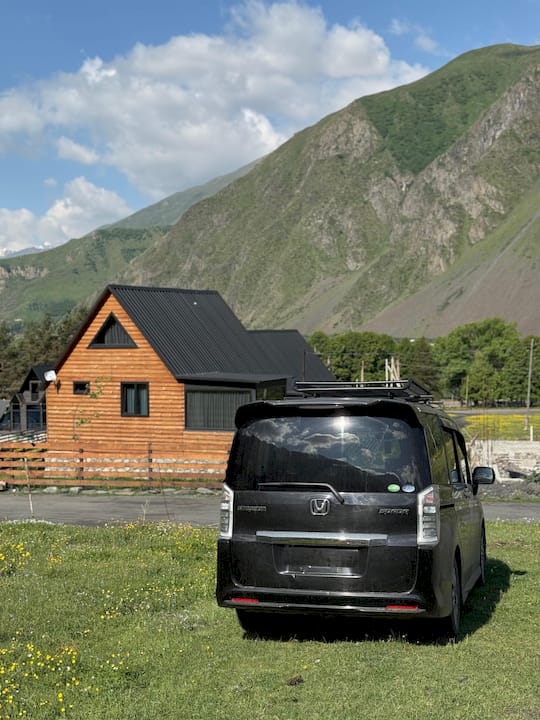
Vehicle selection: The right vehicle changes everything. A standard sedan works fine for Tbilisi city transfers, but a trip to Juta or Dartlo demands a high-clearance 4x4. Agencies assess your route and assign the right vehicle from the start.
-
Driver expertise: Georgian mountain roads are not forgiving. Narrow switchbacks, loose gravel, and sudden fog require drivers who know these roads personally. Experienced drivers also serve as informal guides, pointing out landmarks and suggesting stops you wouldn’t find in a guidebook.
-
Scheduling and flexibility: Agency-managed itineraries build in buffer time. If a road is blocked or a site closes unexpectedly, the agency reroutes without disrupting your entire trip. Solo travelers rarely have this kind of backup plan.
-
Group logistics: Coordinating transport for families, corporate groups, or tour groups requires precise scheduling. Agencies handle vehicle convoys, staggered pickups, and multi-stop days without confusion.
-
Communication support: Bilingual drivers who speak English and Arabic, like those offered through Geo-Van, bridge the language gap that can cause real problems in rural Georgia where English is rarely spoken.
| Travel method | Vehicle type | Driver expertise | Flexibility | Cost estimate |
|---|---|---|---|---|
| Agency private driver | Sedan, minivan, 4x4 | 10+ years, bilingual | High | €80-150/day |
| Rental car (self-drive) | Sedan or SUV | Self-driven | Medium | €40-80/day |
| Marshrutka (shared minibus) | Fixed-route minibus | Standard | Low | €3-7/trip |
| Taxi app (Bolt/Yandex) | Sedan | Varies | Medium | €10-30/trip |
Pro Tip: Always confirm your driver’s experience with mountain routes specifically, not just their general driving history. A driver comfortable in Tbilisi may not have the skills or confidence for the road to Mestia in late autumn.
When you look at vehicle options and driver expertise through a professional platform, you get full transparency on what you’re booking, who’s driving, and what the vehicle is rated for. That clarity matters more than most travelers realize until something goes wrong.
Edge cases and critical support: What agencies solve
Beyond standard logistics, agencies add critical value by tackling edge cases and solving unique travel problems in Georgia.
Georgia is a genuinely safe destination, but it’s not without complications. Road conditions shift dramatically between seasons. Political developments in neighboring regions occasionally affect border crossings and travel advisories. And some of Georgia’s most spectacular destinations sit in areas where a breakdown or wrong turn could mean hours without help.
Crisis management expertise becomes essential in these moments. Edge cases that agencies handle regularly include geopolitical disruptions affecting flight schedules, winter mountain travel requiring experienced drivers with winter tires, mandatory health insurance requirements taking effect from 2026, and remote area access like Ushguli that demands 4x4 capability and local knowledge.
Here’s where agency support becomes genuinely irreplaceable:
-
Winter travel: Roads to Kazbegi and Mestia can close with little warning in winter. Agencies monitor conditions and have contingency routes ready.
-
Medical emergencies: Remote areas have limited medical infrastructure. A good agency knows the nearest facilities and can coordinate evacuation if needed.
-
Document and insurance requirements: From 2026, mandatory health insurance applies to international tourists in Georgia. Agencies help ensure compliance before you arrive.
-
Language and cultural barriers: In rural Georgia, English is rarely spoken. Drivers and coordinators who know the local language and customs prevent misunderstandings that could derail a day.
-
Vehicle breakdowns: In remote areas, a breakdown without a backup plan is a serious problem. Agencies have support networks and replacement vehicles.
“There is no substitute for an agent in a time of crisis. When disruptions happen, travelers with professional support get solutions. Those without it get stuck.”
The driver experience in remote travel makes a measurable difference in outcomes. A driver who has navigated the road to Ushguli in October rain knows exactly where the soft shoulders are, which sections require low gear, and when to turn back. That knowledge isn’t something you find on a map app.
Pro Tip: Before booking any mountain route in Georgia between November and March, confirm that your transport provider uses winter tires and that the driver has completed that specific route in cold-weather conditions within the past season.
Agency support versus independent travel in Georgia
To help you decide, let’s directly compare agency-supported travel with independent methods in Georgia.
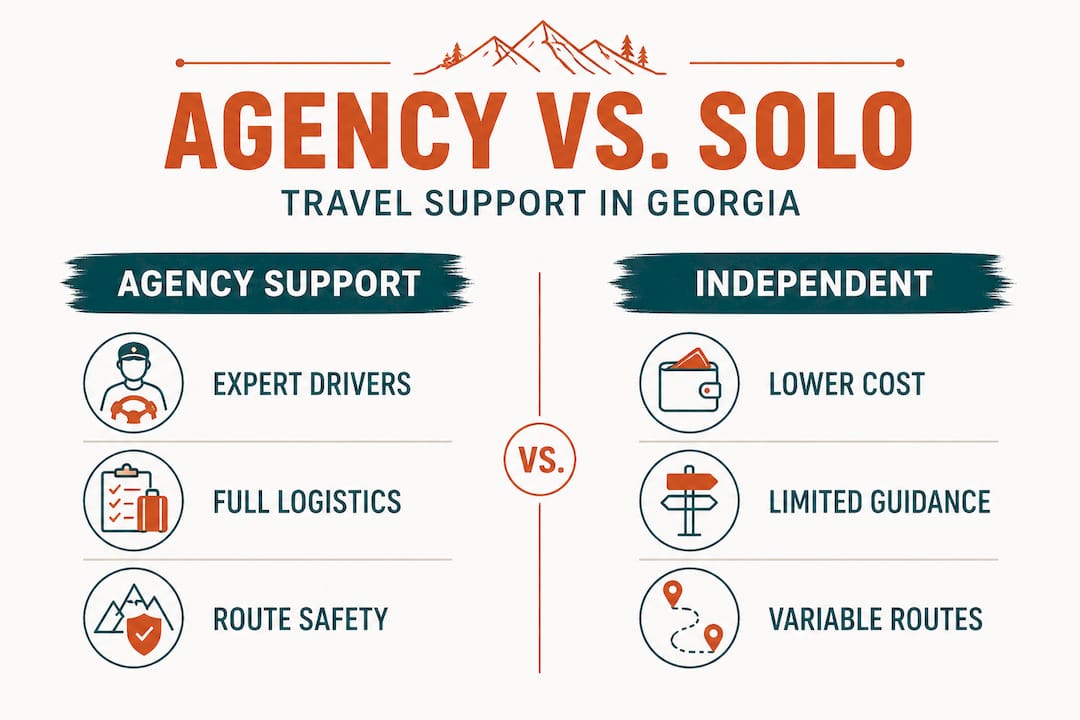
Independent travel in Georgia is absolutely possible, and many visitors do it successfully. Tbilisi has good public transport, Bolt and Yandex taxis work well within the city, and marshrutkas connect major towns for around €5 per trip. For budget travelers sticking to well-worn routes, independent travel makes financial sense.
But the picture changes sharply once you move beyond the main cities. Getting around Georgia independently means marshrutkas at €5 per intercity trip and rental cars, both of which are cheaper but significantly less reliable for mountains and adventure routes. Agencies add real value through personalization, safety, and local insights that self-guided travel in remote areas simply cannot match.
Here’s an honest comparison:
| Factor | Agency-supported travel | Independent travel |
|---|---|---|
| Cost | Higher (€80-150/day for driver) | Lower (€5-40/day) |
| Safety on mountain routes | High (experienced drivers, proper vehicles) | Variable (depends on your driving skill) |
| Flexibility | High (agency adjusts to conditions) | Medium (you manage changes yourself) |
| Local knowledge | Included | Must research independently |
| Language support | Bilingual drivers available | You’re on your own |
| Emergency support | Agency handles it | You handle it |
| Access to remote areas | Full (4x4, experienced drivers) | Limited (rental cars often not insured for off-road) |
The cost difference narrows significantly when you factor in the real risks of independent travel in challenging terrain. A rental car breakdown on the road to Ushguli, a missed marshrutka connection in Zugdidi, or a wrong turn in the Vashlovani desert reserve can cost far more in time, money, and stress than the price difference between a marshrutka and a private driver.
For adventure travelers specifically, the calculation is straightforward. Mountain routes, river crossings, and high-altitude passes require vehicles and drivers that most rental companies explicitly exclude from their standard insurance. Agency support through transport options overview covers these scenarios by design.
Independent travel works well for:
-
City-based trips within Tbilisi, Batumi, or Kutaisi
-
Budget travelers on well-established tourist routes
-
Experienced travelers comfortable with uncertainty and problem-solving
Agency support works better for:
-
Mountain and adventure routes in Svaneti, Kazbegi, or Tusheti
-
Groups, families, or corporate travelers needing coordination
-
First-time visitors to Georgia who want reliability and local guidance
-
Any traveler with a tight schedule where delays are costly
What most travelers overlook about travel agency support in Georgia
Most articles about Georgia travel focus on what to see, not how to actually get there safely. That’s a gap worth addressing directly.
We’ve worked with travelers from across the Middle East, Europe, and North America, and the pattern is consistent. Visitors who research Georgia’s attractions thoroughly often underestimate the operational complexity of reaching them. They book flights, research restaurants, and plan their days, but leave transportation as an afterthought. Then they arrive and discover that the road to Tusheti is a seasonal track that requires a specific vehicle, a local guide, and ideally a full day of buffer time.
The uncomfortable truth is that Georgia rewards preparation more than most destinations. Its beauty is partly a product of its remoteness. The same mountain roads that make Svaneti breathtaking make it logistically demanding. The villages that feel untouched by tourism are that way partly because reaching them takes real effort and the right support.
A seasoned agency doesn’t just solve problems after they arise. It prevents most of them through planning. Knowing that a particular road floods in April, that a border checkpoint closes on certain holidays, or that a specific village requires advance coordination with local families, that’s the kind of knowledge that turns a stressful trip into a smooth one.
Solo strategies and app-based transport work in urban Georgia. But the country’s most memorable experiences sit outside cities, in places where local knowledge, reliable vehicles, and professional coordination make the difference between a story you tell proudly and one you’d rather forget. The value of agency support isn’t just convenience. It’s the confidence to go further, stay longer, and see more.
Seamless travel in Georgia: Connect with reliable support
If you’ve read this far, you understand that Georgia’s logistics deserve as much attention as its destinations. The right support doesn’t just move you from point A to point B. It makes the journey itself part of the experience.
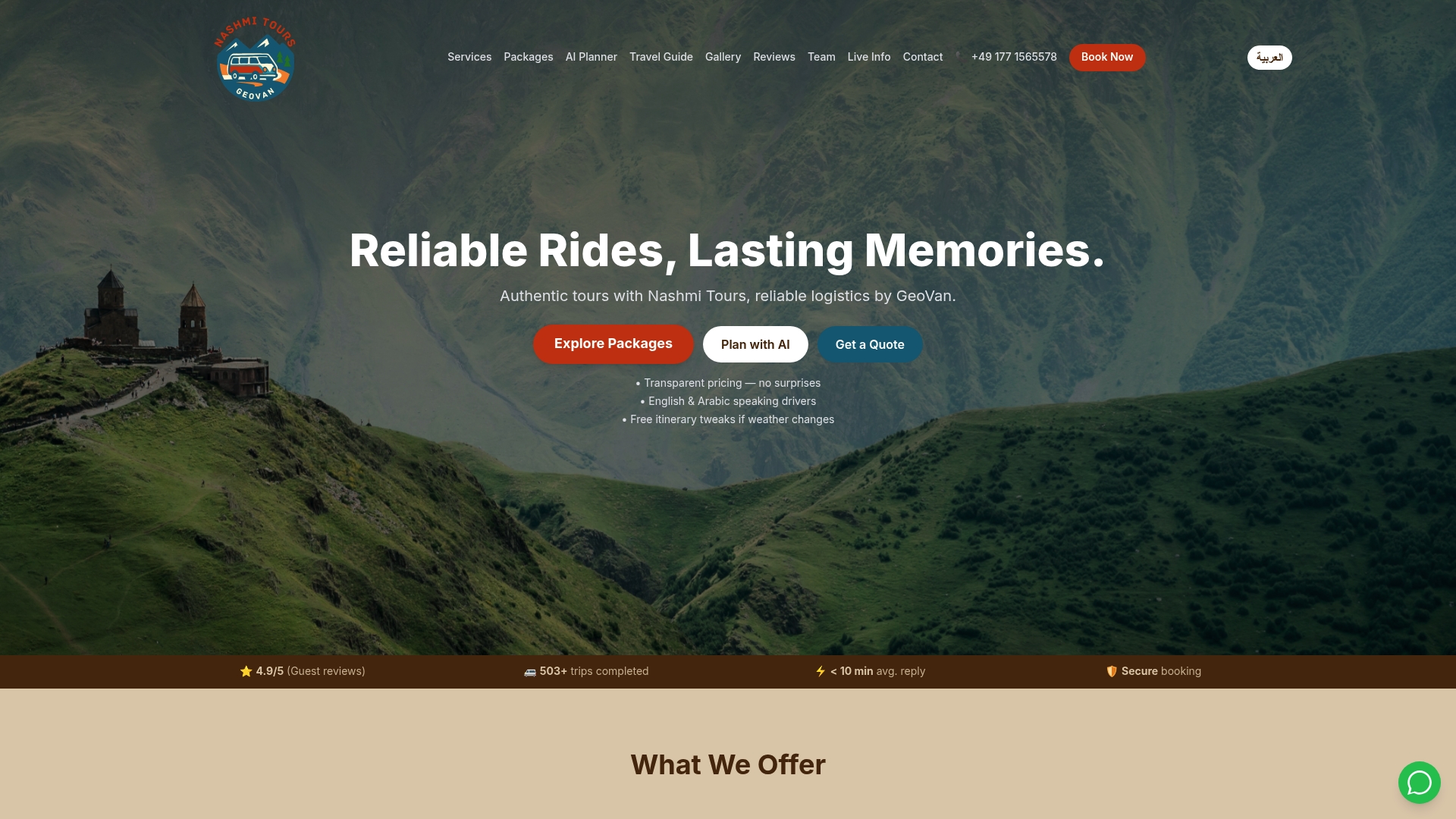
Geo-Van offers exactly the kind of professional, transparent support this article describes. From bilingual drivers with mountain route experience to tailored multi-day packages, the platform is built for international travelers who want reliability without sacrificing flexibility. Whether you’re planning a solo cultural tour or coordinating logistics for a group, you can secure your Georgia transport with clear pricing and verified driver expertise. For a closer look at what’s available, learn about tour packages designed for Georgia’s most rewarding routes.
Frequently asked questions
What does travel agency support typically include in Georgia?
It includes transportation, logistical coordination, local expertise, and operational help for cultural and adventure trips across Georgia. As defined by the IATA program, this covers everything from on-ground assistance to seamless travel coordination for international visitors.
Do I need health insurance to travel with an agency in Georgia?
Yes, mandatory health insurance coverage applies for international tourists visiting Georgia from 2026 onward, and a good agency will flag this requirement before your trip.
How much does a private driver cost compared to public transport?
A private driver costs €80 to €150 per day in Georgia, while marshrutka intercity rides run around €5 each, making agencies a premium but significantly more reliable option for mountain and adventure routes.
Are agencies necessary for adventure travel or mountain routes?
Yes, agencies provide expert drivers, safe vehicles, and critical support for challenging mountain routes and adventure travel in Georgia, particularly for destinations like Ushguli, Tusheti, and upper Svaneti where road conditions demand specialized expertise.